The Devastating Reality of High-Impact Road Accidents
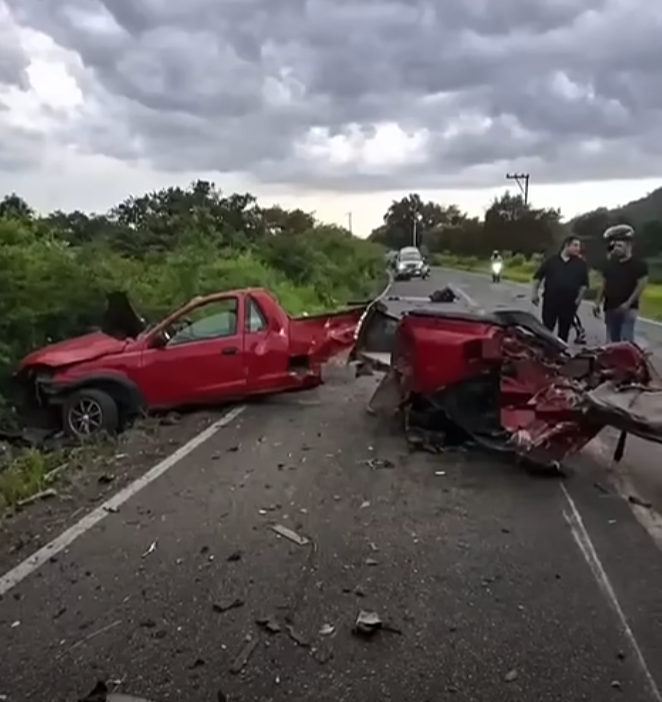
Traffic safety remains an critical global concern as severe vehicular collisions continue to claim lives and cause immense property damage daily. In this shocking footage, viewers are confronted with the immediate and grim aftermath of a violent multi-vehicle accident. The scene opens on a narrow, two-lane rural highway that has been completely blocked by twisted metal and scattered debris. Two red vehicles, severely mangled from the force of a high-impact collision, sit ruined in the middle of the road. One of the vehicles appears to be a compact pickup truck with its front end completely crushed and its hood forced open. The second vehicle has sustained even more catastrophic structural damage, leaving it virtually unrecognizable as a standard passenger automobile. The sheer volume of shrapnel covering the asphalt tells a silent story of sudden, violent kinetic energy. Dark, ominous storm clouds blanket the sky above, casting a somber mood over the entire location. This harrowing visual serves as a stark reminder of how quickly a routine drive can transform into a life-altering disaster.
Analyzing the Critical Factors Behind Highway Collisions
Investigating the root causes of major roadway incidents is essential for developing effective preventative measures and safety protocols. Law enforcement officials frequently cite excessive speed, distracted driving, and unfavorable weather conditions as primary catalysts for highway disasters. Looking at the extensive structural deformation of the red cars, it is evident that immense velocity played a role. Rural roads often lack the protective dividing barriers found on major interstates, significantly increasing the risk of head-on impacts. Furthermore, the damp appearance of the surroundings suggests that compromised tire traction might have contributed to a loss of control. When vehicles collide at high speeds, the crumple zones are designed to absorb energy, but extreme forces can still breach the passenger cabin. Emergency response teams must act with extreme urgency when arriving at such severely compromised accident scenes. Extracting passengers from heavily crushed vehicles requires specialized hydraulic tools known colloquially as the jaws of life. Every second counts during the golden hour of emergency medical care following a traumatic vehicular event.
The Immediate Response and Bystander Behavior at Crash Scenes
In the wake of an unexpected road crisis, the actions of nearby motorists and eyewitnesses can influence the immediate outcome. As the video progresses, several bystanders can be seen standing near the perimeter of the wreckage, visibly shaken by what they are witnessing. One man walks cautiously toward the shattered remains of the vehicles, likely checking for survivors or assessing the immediate danger. Another individual remains standing near a parked motorcycle, observing the chaotic scene while waiting for professional help to arrive. In the far background, a white pickup truck and another vehicle have come to a complete halt, unable to pass through the blocked thoroughfare. The initial minutes following a major crash are often filled with confusion, panic, and a desperate search for answers. It is crucial for bystanders to maintain a safe distance to avoid secondary hazards such as leaking fuel or electrical fires. Calling emergency services immediately with precise location details is the single most important action a witness can take. Traffic management quickly becomes a priority to prevent approaching motorists from piling into the existing wreckage.
Structural Vehicle Damage and Modern Automotive Safety Engineering
The extent of the destruction visible in this footage underscores the critical importance of modern automotive safety engineering. Totaled vehicles, while tragic, often demonstrate how structural frames are engineered to sacrifice themselves to protect human life. The front-end collapse of the red pickup truck indicates that the engine bay absorbed a significant portion of the initial impact force. However, when a vehicle is ripped apart to the degree seen in the second car, the limits of standard safety features are tested. Side-impact integrity, reinforced pillars, and advanced airbag systems are critical components designed to mitigate passenger trauma. Automotive manufacturers continuously analyze real-world crash data to improve the crashworthiness of newer model vehicles. Regulatory bodies strictly enforce safety ratings to ensure that consumer vehicles can withstand severe real-world collision scenarios. Despite these engineering marvels, no vehicle is completely invincible against the laws of physics at extreme speeds. Safe driving habits, legal speeds, and absolute attentiveness remain the ultimate defense against roadway tragedies.
Raising Societal Awareness for Responsible Driving Practices
Publicly sharing authentic footage of accident aftermaths plays a powerful role in public safety education and awareness campaigns. Visualizing the real, unedited consequences of a highway collision can shock motorists into adopting safer behind-the-wheel behaviors. Educational programs utilized by transportation departments frequently feature such sobering imagery to target young or reckless drivers. Seeing a completely destroyed vehicle reminds communities that traffic laws exist for mutual protection rather than mere restriction. Defensive driving courses emphasize the necessity of maintaining adequate following distances and scanning the road ahead constantly. As winter approaches or weather patterns worsen, drivers must proactively adjust their habits to accommodate slippery or unpredictable roads. Eliminating distractions such as mobile phone usage is a fundamental step toward reducing preventable highway fatalities globally. Every driver holds a shared social responsibility to ensure that they arrive at their destination safely without endangering others. Ultimately, fostering a widespread culture of mindfulness and respect on the asphalt is the key to preventing future tragedies like the one captured here.