The Threat of Coastal Erosion: A High-Rise Collapse Crisis
The Threat of Coastal Erosion: A High-Rise Collapse Crisis
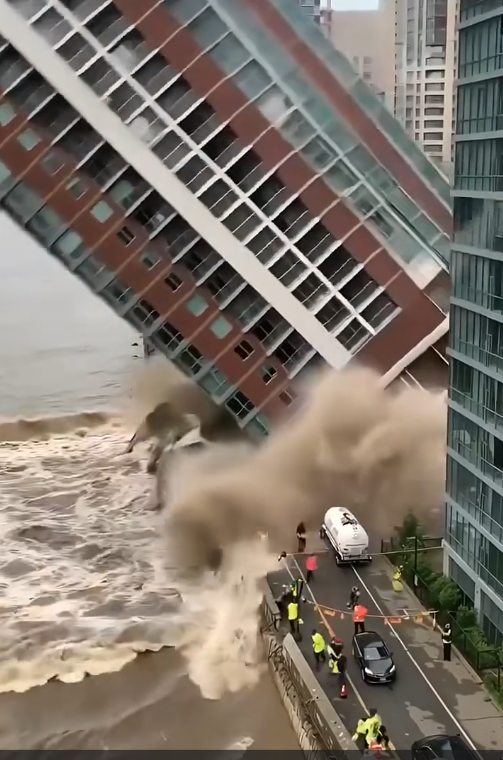
Natural disasters continue to pose a severe threat to modern urban infrastructure built near large bodies of water. The footage captured in the video highlights a terrifying moment where a massive riverbanks collapses. This aggressive erosion immediately compromises the foundation of a busy waterfront road. The violent brown currents of the river continuously batter the shoreline, tearing away concrete barriers. Within seconds, a substantial portion of the pedestrian walkway slides completely into the turbulent waters. Emergency responders and police personnel quickly cordon off the area to keep onlookers safe.
The situation escalates rapidly as the ground beneath the adjacent structures completely gives way. A massive high-rise apartment building begins to lean dangerously toward the surging river. The sheer weight of the skyscraper forces it to tilt past the point of no return. In a matter of moments, the entire multi-story building topples over into the raging current. The impact creates a monumental splash, sending waves of muddy water high into the air. This catastrophic event demonstrates how quickly geological instability can destroy heavily populated urban zones.
The Economic and Civil Toll of Structural Failures
The destruction of large residential buildings leaves behind a devastating trail of economic ruin. Dozens of families are instantly displaced as their homes vanish into the riverbed. The financial loss for property owners, developers, and insurance companies ranks in the millions of dollars. Nearby vehicles, including a white van and several cars, sit precariously close to the edge of the newly formed cliff. Debris from the collapsed structure clogs the waterway, creating further hazards for river traffic. The local economy faces long-term disruption as vital transportation routes are completely severed.
Beyond the immediate financial toll, the social impact on the community is deeply distressing. Emergency shelters must be rapidly deployed to accommodate the sudden influx of homeless citizens. Shocked onlookers stand behind police tape, watching their neighborhood transform into a disaster zone. The psychological trauma of witnessing a massive building collapse lingers with survivors for years. City officials face intense pressure to explain how such a vulnerable structure was permitted on an unstable shoreline. Rebuilding the community’s trust and infrastructure will require decades of dedicated effort and funding.
Evaluating Urban Planning and Shoreline Engineering
As sea levels rise and extreme weather events intensify, urban engineering must adapt to new realities. Constructing high-density residential buildings directly on riverbanks carries inherent risks that cannot be ignored. Geotechnical surveys must be conducted with extreme precision before any coastal development begins. Retaining walls and shoreline reinforcements require regular maintenance to withstand constant aquatic pressure. Incorporating natural buffers, such as wetlands, can help absorb the kinetic energy of violent rivers. Governments must prioritize public safety over commercial real estate profits in vulnerable zones.
Modern technology offers innovative solutions for monitoring structural integrity in real-time. Advanced sensors can detect subtle ground shifts and tilt variations in high-rise buildings before disasters occur. Early warning systems give residents valuable minutes to evacuate safely, preventing immense loss of life. Satellite imaging allows meteorologists and engineers to track severe shoreline erosion from space. International cooperation enables cities to share breakthroughs in resilient architecture and disaster management. Ultimately, preventing future collapses depends on a proactive approach to engineering and strict zoning laws.
Key Takeaways for Waterfront Urban Safety
- Foundation Monitoring: High-rise buildings on shorelines require continuous geological assessments.
- Rapid Evacuation: Early warning signs of soil erosion must trigger immediate emergency protocols.
- Resilient Infrastructure: Future cities must invest in advanced seawalls to combat aggressive river currents.