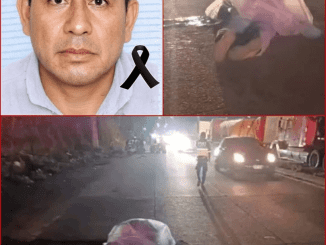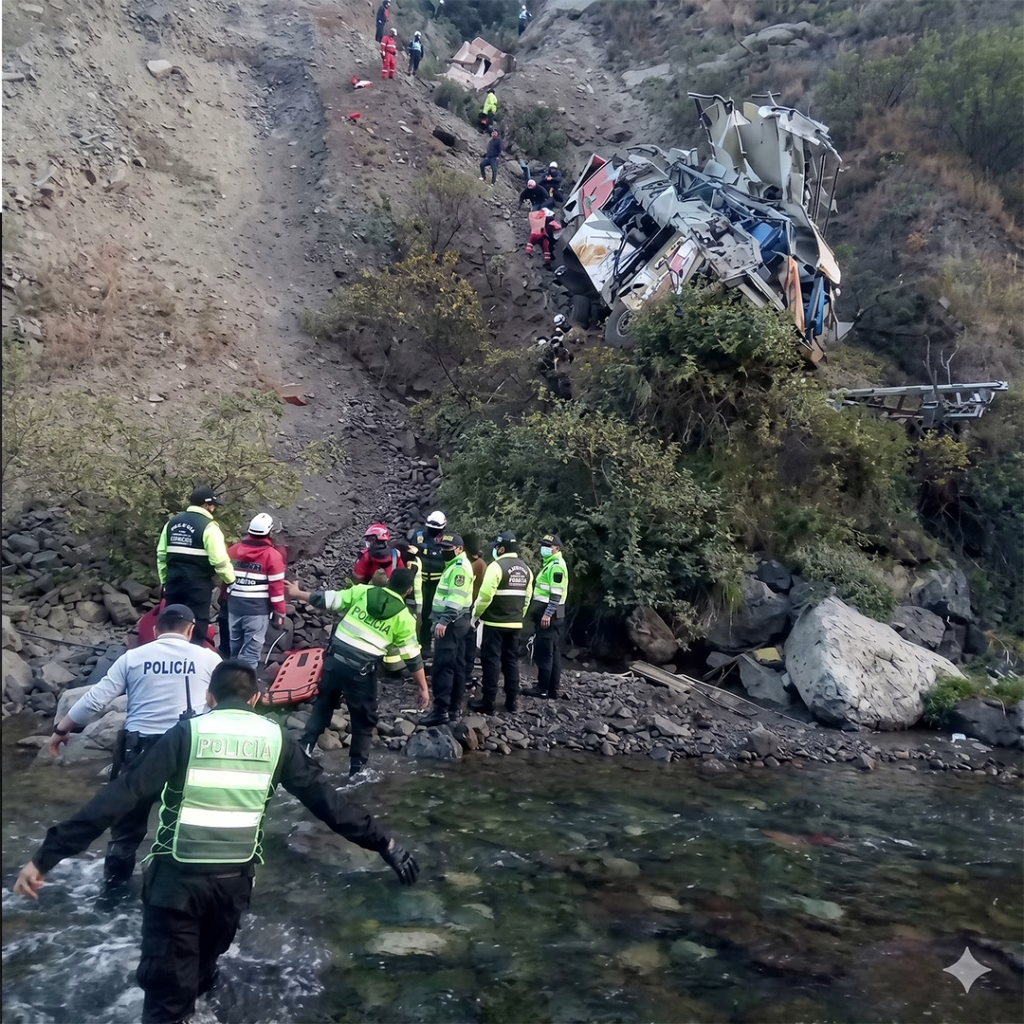
The morning in the Mixteca region of Oaxaca dawned like many others: with the fresh air descending from the mountains, the early morning traffic on the highway, and the routine of those traveling between towns to work, study, or deliver goods. But in a matter of seconds, what seemed like a normal day turned into one of those news stories that hits hard and leaves an uncomfortable silence in your throat: a highway accident claimed the lives of 27 people.
It all happened on a road in the Mixteca region, an area known for its mountainous landscapes, sharp curves, and stretches that demand extreme caution while driving. Witnesses report that the vehicle involved lost control at a critical point on the road, although the exact circumstances are still under investigation. What is known is that the impact was devastating. It was not a minor collision or a simple accident: it was a tragedy of great magnitude that left a scene difficult for anyone arriving minutes later to comprehend.

At the scene, the first to help were residents of nearby communities, along with emergency teams who arrived as soon as they received the call. Amid dust, sirens, and confusion, they encountered a situation that required not only speed but also immense emotional strength. The highway, normally used by families, truckers, and local travelers, was transformed into a site of collective grief.
📌 IMPORTANT: The video related to this story can be found at the end of the article.
Authorities immediately began gathering information. Their priority was attending to possible survivors, securing the area, and coordinating the removal of the bodies. Amidst all this, news of the 27 victims began to circulate rapidly, first by word of mouth in nearby towns, then on social media, and finally in regional and national news outlets.

The hardest part about these kinds of tragedies isn’t just the number, but what lies behind it. Each number represents a life: people with stories, families, jobs, plans, unfulfilled dreams. People who left home hoping to reach their destination and never returned. That’s the most painful part when the news stops being a headline and becomes a reality for dozens of families.
In the Mixteca region, where distances between communities can be vast and journeys challenging, road accidents are not entirely uncommon, but when one of this magnitude occurs, the emotional impact is immense. There is no nearby community that doesn’t know someone affected, directly or indirectly. The pain is shared, even if the names of all the victims are unknown.

As the hours passed, the first accounts from those who were near the scene began to emerge. Some drivers traveling behind the vehicle managed to brake in time and avoid being involved in the accident. Others, however, stopped to try to help, although the magnitude of the incident made intervention almost impossible without specialized support. These are scenes that remain etched in the memory of those who witness them, even if they had no connection to those involved.
Rescue teams worked for several hours in the area. Their task was not only to address the immediate emergency, but also to recover the victims with care and ensure the road could be safely reopened. The highway remained partially closed while the rescue operations were underway.

Meanwhile, at nearby hospitals, uncertainty gripped the area. Families began arriving, seeking information and hoping to find their loved ones among the survivors. These moments, when no one has clear answers, are often the most agonizing. Authorities established information channels to guide those affected and try to bring clarity amidst the chaos.
As the day progressed, the news became the central topic throughout the region. It wasn’t just another road accident; it was a collective tragedy. Social media was flooded with messages of condolence, but also with expressions of concern and calls for reflection on road conditions, road safety, and the importance of driving with extreme caution in mountainous areas like the Mixteca region.

These types of roads, while connecting essential communities, present significant challenges: sharp curves, changes in altitude, narrow sections, and in some cases, a lack of adequate signage. All of this, combined with driver fatigue or potential mechanical failures, can create a dangerous situation.
As more details emerge, authorities have indicated that the investigation will remain open to determine exactly what caused the accident. The condition of the vehicle, road conditions, and any other contributing factors will be analyzed. However, for the affected families, no technical explanation can replace their loss.

In towns across the region, the atmosphere has completely changed. In the squares, in the shops, in everyday conversations, the topic is the same: the tragedy. There is a shared feeling of sadness, but also of reflection. Many local drivers have begun to discuss the importance of reducing speed on certain stretches of road and not taking any chances on routes that, although familiar, can be unpredictable.
State authorities have also expressed their condolences and pledged support to the victims’ families. In these situations, support is not only logistical but also human. It means being present in the midst of grief, facilitating procedures, assisting with transportation, and above all, not leaving families alone during such a difficult time.

Meanwhile, the Mixteca highway is slowly returning to normal, though with a scar that won’t easily disappear. Those who pass through the area will surely remember what happened. On occasions like this, the road ceases to be just asphalt and curves; it becomes a silent reminder of how fragile life can be.
As the days go by, media attention will likely diminish, as it does with many stories of this kind. But for those who lost someone in this accident, time stands still in a different way. Grief doesn’t keep pace with current events; it moves slowly, heavily, with questions that don’t always have answers.

In the end, this tragedy leaves behind more than just a statistic. It serves as a stark reminder of the importance of road safety, road maintenance, and careful driving. But above all, it leaves a human lesson: behind every journey lies a story, and behind every road are lives that depend on decisions made in seconds.